

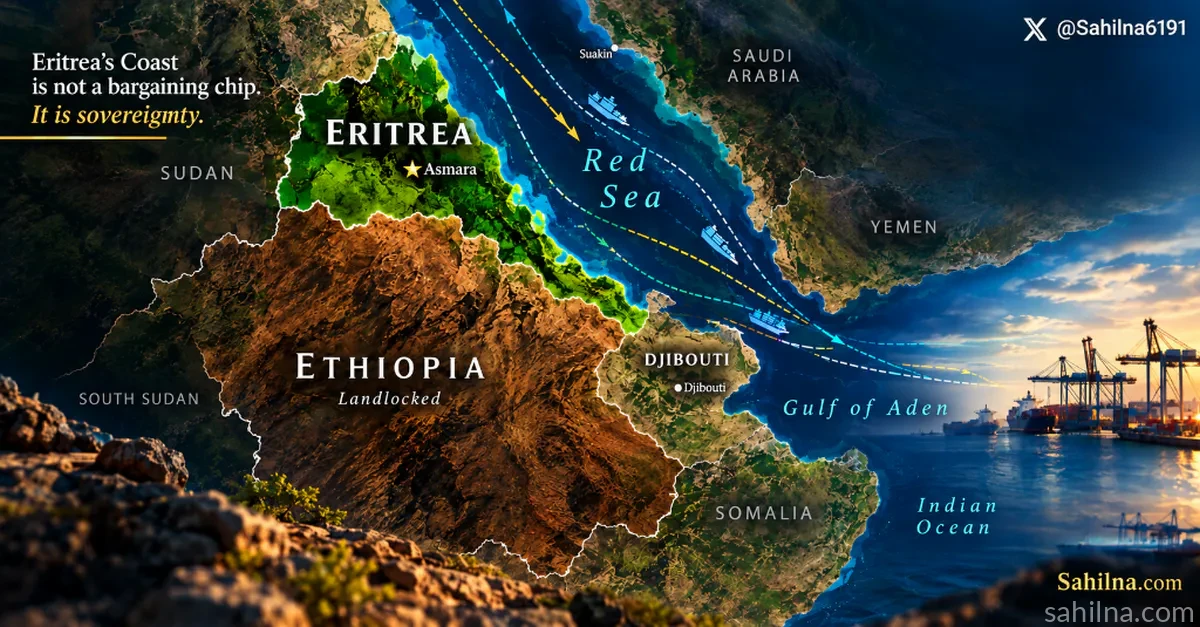
The Horn of Africa today is engulfed in far more serious geopolitical, economic, and internal conflicts than at any point in the past 25 years. The region has increasingly become a battleground for proxy wars, where powerful external actors exert influence through shadow operations, while soft‑power players manipulate local governments as mere puppets. We are witnessing a destructive zero‑sum pattern in which geopolitical interests are pursued at the expense of national sovereignty, eroding the independence of several Horn of Africa states. This dynamic is corroding the very foundations of international law, undermining its legitimacy and corrupting its principles.
Every landlocked country has the right to access the sea for maritime purposes, a principle explicitly affirmed under UN Resolution Article 125. However, this does not imply that the resolution grants territorial sovereignty.
Ethiopia’s current narrative on sea access largely driven by external actors is not genuinely focused on securing a legitimate maritime lifeline or trade routes to support economic development. Instead, it reflects a troubling agenda: an opportunistic playbook by the United Arab Emirates (UAE), designed to entangle Ethiopia and the wider Horn of Africa in perpetual conflict. The ultimate aim is to carve out geopolitical advantage in port investments and exploit the region’s natural resources, undermining stability and sovereignty in the process.
Criticizing the UAE’s hazardous war strategy in Africa crafted to protect its questionable investments is one thing. But ignoring the willingness of certain African leaders to serve as instruments of Abu Dhabi’s proxy agenda is the height of naïveté. The Emirates would never have the nerve to implant destabilizing policies without the complicity of these easily‑bought leaders.