

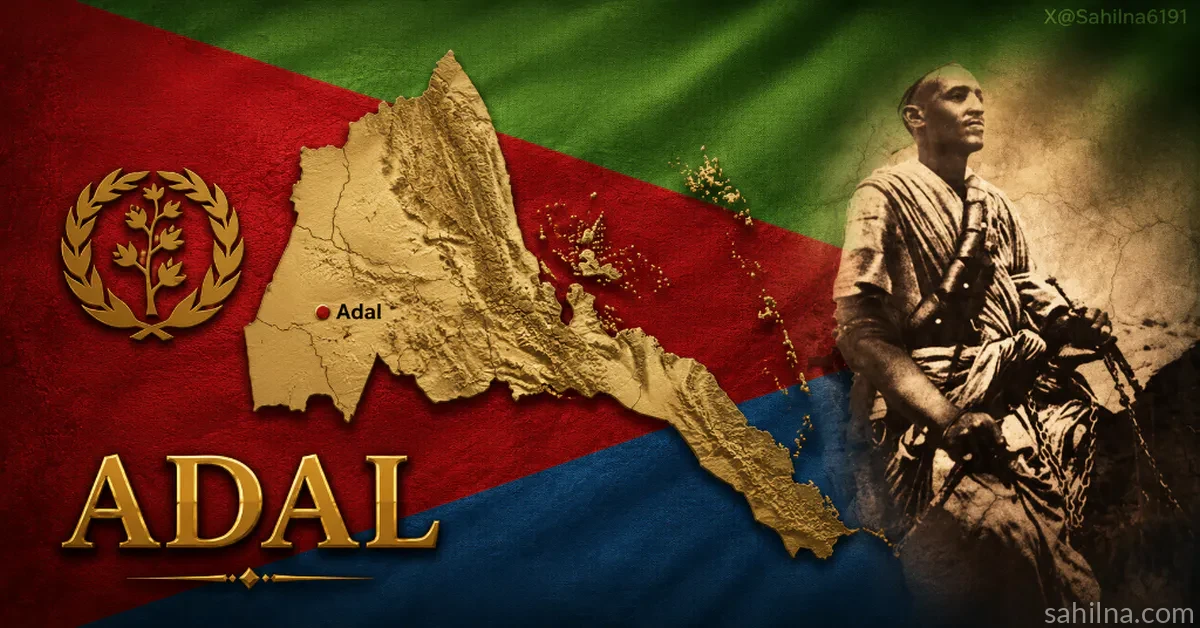
September 1, 1961 — September 1, 2026
Sixty-five years ago, in the rugged lowlands of Eritrea, a decision was made that would change the course of history.
On September 1, 1961, Hamid Idris Awate and his small group of fighters opened fire against the forces of Ethiopian domination. The first shots of the Eritrean armed struggle were fired.
For Eritreans, this was not simply the beginning of a war.
It was the beginning of a national determination.
It was Bahti Meskerem — the day a people who had exhausted every peaceful and political avenue decided that their dignity, identity, and right to determine their own future could no longer be surrendered.
A People Who Refused to Be Erased
Eritrea’s road to independence did not begin with the first rifle shot.
For years, Eritreans had pursued their aspirations through political organization, petitions, diplomacy and peaceful resistance. After the defeat of Italian colonial rule, Eritreans sought to determine their own political future.
Instead, in 1950, the United Nations adopted a federal arrangement linking Eritrea with Ethiopia.
The federation was supposed to protect Eritrea’s autonomy and institutions.
Instead, those guarantees were progressively dismantled.
Eritrean political freedoms were restricted. National institutions were weakened. Eritrean symbols and identity were attacked. Eventually, Ethiopia unilaterally abolished the federation and annexed Eritrea in 1962.
The international community watched.
And Eritreans understood a painful lesson: their freedom could not be entrusted to the interests of foreign powers.
The struggle for self-determination had been denied through diplomacy.
The road to armed resistance was therefore born from years of political struggle, frustration and the refusal to accept permanent domination.
September 1: The First Step on a Long Road
When Hamid Idris Awate raised the rifle on September 1, 1961, he could not know what the following thirty years would demand.
He could not know the mountains that would become battlefields.
He could not know the generations that would sacrifice their youth.
He could not know that the struggle he helped ignite would ultimately transform Eritrean history.
But he understood something fundamental:
A people that abandons its dignity loses more than territory. It loses its future.
Awate therefore became a symbol of the decision to resist.
His legacy is not measured merely by the first shots he fired. It is measured by what those shots represented: the refusal of Eritreans to disappear as a people.
Thirty Years of Sacrifice
The struggle that began in 1961 would become one of Africa’s longest and most demanding wars of national liberation.
Eritreans faced forces vastly superior in military resources and manpower. Yet the struggle survived.
It survived because it was carried not only by fighters in the field, but by an entire society.
Farmers, workers, mothers, fathers, students, refugees and communities across Eritrea contributed to the national cause.
Generations endured displacement, loss and hardship.
Thousands gave their lives.
Many never returned home.
They did not make those sacrifices because independence was easy.
They made them because they believed that freedom, dignity and national existence were worth defending.
That is why Eritrean independence cannot be reduced to a political declaration or a diplomatic agreement.
It was earned through sacrifice.
From Adal to Asmara
The road from September 1, 1961 to May 1991 was long and extraordinarily difficult.
Yet the Eritrean people endured.
When Eritrean forces entered Asmara in 1991, the armed struggle had reached its decisive victory.
Two years later, in 1993, the Eritrean people overwhelmingly confirmed independence through a referendum.
For Eritreans, this completed a journey that had begun decades earlier.
The world could finally see what Eritreans had refused to surrender:
Eritrea was a nation determined to exist on its own terms.
Independence Was Not a Gift
This is perhaps the most important lesson of Bahti Meskerem.
Eritrean independence was not handed to Eritrea by a foreign power.
It was not a gift from a great nation.
It was not the result of somebody else’s generosity.
It was the product of a people’s determination and sacrifice.
That history matters.
Because nations that forget the price of their freedom can easily forget the value of their sovereignty.
Eritrea must therefore remember.
Remember Awate.
Remember the fallen.
Remember the fighters who never saw independence.
Remember the families who carried the burden of war.
Remember the communities that survived displacement and destruction.
And remember the generations who believed that Eritrea’s future belonged to Eritreans.
Bahti Meskerem Is More Than a Date
September 1 is not simply another date on the calendar.
It is a day of remembrance.
It is a day of gratitude.
It is a day of national reflection.
But above all, it is a day of dignity.
Bahti Meskerem reminds Eritreans that our history was written by people who refused to surrender their identity.
It reminds us that unity was forged through shared hardship.
It reminds us that the Eritrean flag carries the memory of those who sacrificed everything so that future generations could live under it.
And it reminds us that sovereignty is not merely a word.
Sovereignty is responsibility.
Eritrea’s Future Belongs to Eritreans
Today, Eritrea faces a different generation of challenges.
The battlefield has changed.
The weapons are different.
The pressures are different.
But the fundamental principle remains unchanged:
Eritrea’s future must be determined by Eritreans.
A sovereign nation must protect its independence, preserve its national identity, strengthen its institutions, develop its economy and give its young people reasons to build their future at home.
Patriotism is therefore not only about remembering yesterday.
It is about building tomorrow.
The greatest tribute to those who gave their lives for Eritrea is not merely to speak their names.
It is to ensure that their sacrifice was not in vain.
To the Eritrean People
To every Eritrean — at home and across the world — September 1 carries a message.
Our differences must never become greater than the history we share.
Our disagreements must never erase our common identity.
Our future must never be surrendered to division.
We are connected by a history that cannot be rewritten by political fashion, foreign narratives or temporary circumstances.
We are connected by the sacrifices of those who came before us.
We are connected by Eritrea.
One people. One history. One national dignity. One sovereign homeland.
Bahti Meskerem — Forever
Sixty-five years after the first shots at Adal, the meaning of September 1 remains powerful.
A small beginning became a national revolution.
A revolution became independence.
And independence became a responsibility passed from one generation to the next.
The men and women who began the struggle did not know exactly what the future would bring.
But they knew what they refused to accept.
They refused to live without dignity.
They refused to see their identity erased.
They refused to surrender their homeland.
And they refused to believe that Eritrea had no future.
That spirit is the enduring meaning of Bahti Meskerem.
We remember the fallen.
We honor the veterans.
We defend the truth of our history.
We protect our unity.
We build our nation.
And we carry Eritrea forward.
Happy Bahti Meskerem — September 1, 2026.
65 years of resistance.
65 years of sacrifice.
65 years of national determination.
Eritrea was not given her freedom. Eritreans fought for it.