

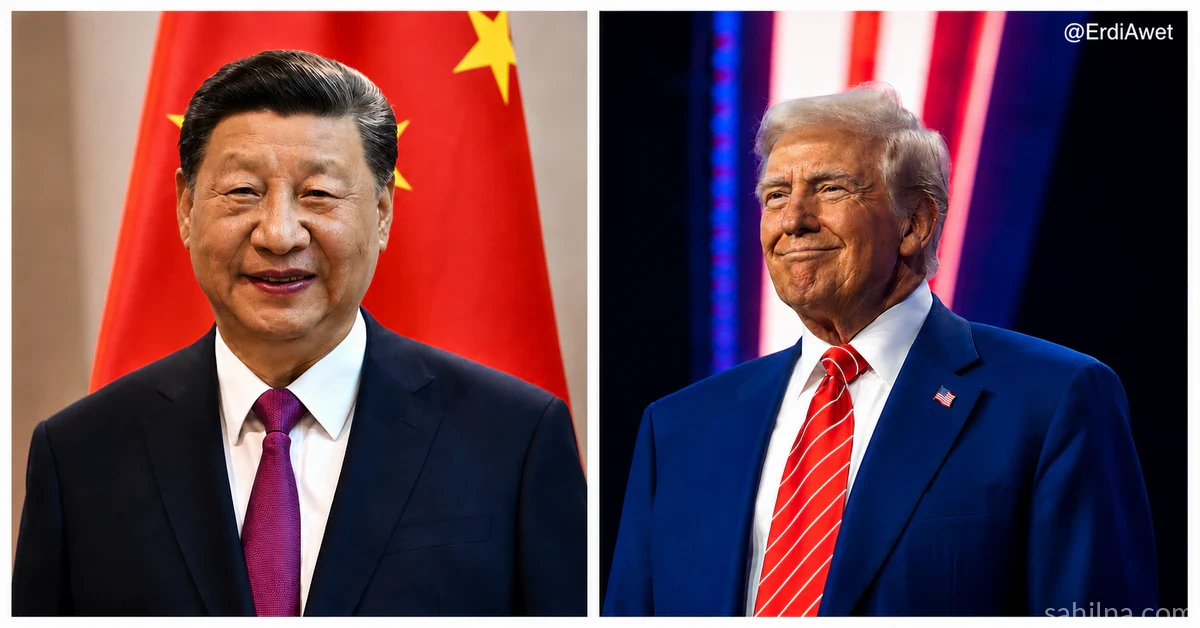
The recent meeting between Donald Trump and Xi Jinping in Beijing highlights the profound transformation underway in the international system. Despite rising tensions between the United States and China, both sides increasingly recognize that direct confrontation is neither sustainable nor beneficial for global stability.
Behind the diplomatic language and symbolic gestures lies a deeper reality: the world is moving away from a unipolar order dominated by a single power toward a more complex multipolar system shaped by competing political, economic, and strategic centers.
The rivalry between Washington and Beijing remains significant. It plays out through economic competition, technological confrontation, military tensions in the Pacific, disputes over Taiwan, and the broader struggle for global influence. Taiwan, in particular, remains one of the most sensitive flashpoints in international politics. Beijing views the island as part of China and considers foreign involvement a direct challenge to its sovereignty. At the same time, the United States continues to provide political and military support to Taiwan, further intensifying regional tensions.
Yet despite these disputes, the meeting in Beijing shows that even major rivals understand the risks of uncontrolled escalation. The two powers remain deeply interconnected economically and strategically, making dialogue not just desirable but necessary.
For many countries in the Global South, especially in Africa and the Horn of Africa, the summit is another reminder that international politics is driven more by strategic interests than by public rhetoric or moral principles. Over the past decades, geopolitical competition among major powers has extended far beyond Europe and Asia, increasingly shaping Africa through economic pressure, military partnerships, infrastructure projects, and foreign political influence.
As global competition intensifies, smaller nations face growing pressure to align with competing power blocs. This dynamic creates serious risks for regional stability, sovereignty, and independent decision-making. The current international environment therefore demands caution, strategic independence, and a clear understanding of the shifting balance of power.
The future of international stability will not depend solely on relations between Washington and Beijing, but also on whether emerging multipolar dynamics can evolve without pushing the world toward larger confrontations. For countries seeking stability and sovereignty, the central challenge remains how to protect national interests while avoiding becoming instruments of larger geopolitical struggles.
The Beijing meeting should not be seen simply as another diplomatic summit. It reflects a world order undergoing historic transformation one in which dialogue, however fragile, remains essential to navigating the uncertainties of global rivalry.